How to Calculate Press Brake Tonnage for Different Tooling (Complete Guide 2026)
May 06, 2026
How to Calculate Press Brake Tonnage for Different Tooling
— Tooling Formula & Tonnage Chart
Press brake tonnage is calculated based on material thickness, material strength, die opening, and bending length.
For air bending, the standard formula is:
T=1.42×σ×t2VT = \frac{1.42 \times \sigma \times t^2}{V}
T=V1.42×σ×t2
Where:
T = tonnage per meter (kN/m)
σ = tensile strength of material (N/mm²)
t = material thickness (mm)
V = die opening (mm)
In simple terms:
Thicker material requires more tonnage
Smaller V opening requires more tonnage
Stronger material requires more tonnage
This formula is commonly used when selecting:
heavy duty press brake dies
multi V press brake dies
large V opening press brake die
Smaller die openings and thicker materials dramatically increase bending tonnage.
Why Press Brake Tonnage Matters
Correct tonnage calculation helps manufacturers:
Prevent machine overload
Avoid tooling breakage
Improve bending accuracy
Extend tool life
Reduce production cost
Incorrect tonnage selection can cause:
Cracked punches
Damaged dies
Machine deflection
Poor bending angles
Press Brake Tonnage Formula Explained
1. Material Thickness
Tonnage increases exponentially with thickness.
Example:
Thickness
Relative Tonnage
1 mm
1×
2 mm
4×
3 mm
9×
4 mm
16×
Because thickness is squared in the formula.
2. Die Opening (V Opening)
The V opening directly affects tonnage.
A large V opening press brake die reduces bending force and machine load.
This is ideal for:
aluminum sheets
thin sheet metal
large radius bending
3. Material Type
Different materials require different tonnage.
Material
Relative Force
Mild Steel
1.0×
Stainless Steel
1.5×
Aluminum
0.5×
Example:If mild steel needs 50 tons, stainless steel may require 75 tons.
Tonnage Differences by Tooling Type
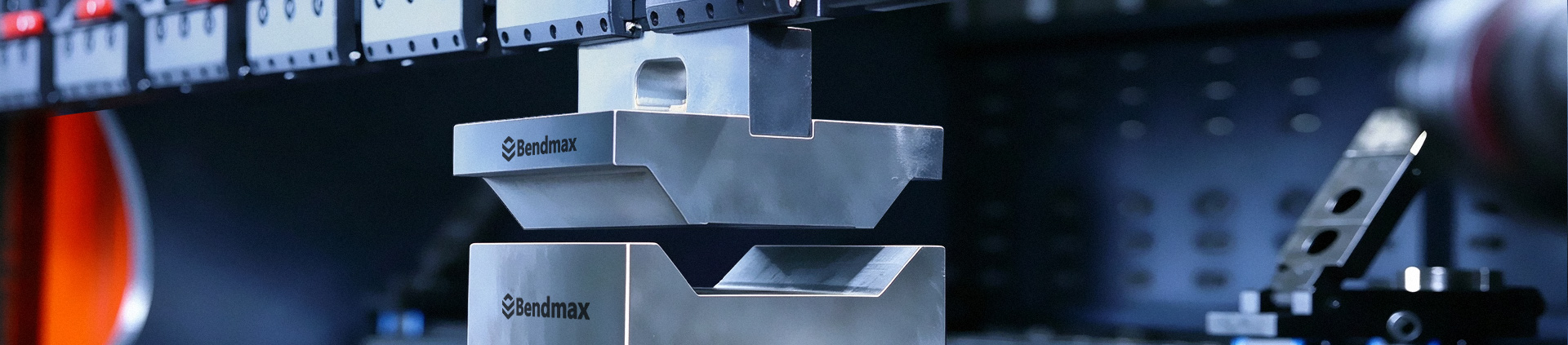
Heavy Duty Press Brake Dies
Best for:
thick plate bending
structural steel
high tonnage applications
Keywords naturally included: heavy duty press brake dies
Characteristics:
reinforced body
high load capacity
smaller V options
Advantages:
high durability
suitable for thick material
better load resistance
Disadvantage:
higher tonnage demand
Typical applications:
truck chassis
construction parts
industrial cabinets
Multi V Press Brake Dies
Keywords naturally included: multi V press brake dies
Multi V dies contain several V openings in one tool.
Benefits:
one die for multiple thicknesses
reduced setup time
lower tooling inventory cost
Applications:
job shops
flexible manufacturing
small batch production
Example:A single multi V die may include:
16 mm
22 mm
35 mm
50 mm V openings
This allows operators to optimize tonnage quickly.
Large V Opening Press Brake Die
Keywords naturally included: large V opening press brake die
Large V dies are ideal for:
soft materials
cosmetic parts
no-mark bending
Advantages:
lower tonnage
larger bend radius
reduced tool wear
Best for:
HVAC panels
enclosures
appliance parts
Example Press Brake Tonnage Calculation
Material: Mild steelThickness: 3 mmV opening: 24 mm
Formula:
T=1.42×450×3224T = \frac{1.42 \times 450 \times 3^2}{24}T=241.42×450×32
Result:
≈ 24 kN/cm
This equals approximately:
240 tons/meter
(Actual values vary by machine and tooling geometry.)
Recommended Die Selection Rule
A common rule:
V opening = 6× to 8× material thickness
Examples:
Thickness
Recommended V Opening
1 mm
6–8 mm
2 mm
12–16 mm
3 mm
18–24 mm
6 mm
36–48 mm
For thick materials, choose heavy duty press brake dies.
For flexible production, choose multi V press brake dies.
For lower tonnage and smoother bending, choose large V opening press brake die.
Accurate press brake tonnage calculation is essential for safe and efficient bending.
Choosing the right tooling matters:
✅ Heavy duty press brake dies for high tonnage and thick plate✅ Multi V press brake dies for flexible production✅ Large V opening press brake die for lower tonnage and larger radius bending
At BENDMAX, we supply high-precision press brake tooling designed for:
durability
accuracy
compatibility with major press brake systems
Contact us for tooling recommendations and custom bending solutions.
FAQ: Press Brake Tonnage Calculation
How do I calculate press brake tonnage?
Use this formula:
T=1.42×σ×t2VT = \frac{1.42 \times \sigma \times t^2}{V}T=V1.42×σ×t2
Tonnage depends on:
thickness
material
die opening
Does a larger V opening reduce tonnage?
Yes.A larger V opening reduces required bending force but increases bend radius.
This is why a large V opening press brake die is used for low-force bending.
What tooling is best for thick plate bending?
For thick materials, use heavy duty press brake dies because they offer:
higher load capacity
better structural strength
reduced deformation
Why use multi V press brake dies?
Multi V press brake dies improve efficiency by allowing multiple V openings in one die.
Benefits:
fewer tool changes
lower tooling cost
higher flexibility
Bendmax provides tonnage reference data for each product, which can be used as a guideline when selecting tooling. You can also contact our engineers for professional assistance.



 Phone: (0086)-15002165198
 Email: jason@bendmax.com
 Wechat: Privacy Policy
 IPv6 network supported


 English


